
The End of the Chatbot Era
By early 2026 the way we interact with technology has fundamentally transformed because we have moved past the era of simple assistants. For years we relied on tools that were reactive and required a specific prompt for every single action. Today we are witnessing a silent revolution where AI systems act as digital coworkers that handle entire workflows from start to finish. This shift represents more than just a productivity boost because it marks a profound change in how global business operates at its very core. Organizations are no longer just looking for answers from a screen but are instead deploying agentic systems that can reason and plan and act autonomously across complex tasks.
Designing for Goals Instead of Prompts
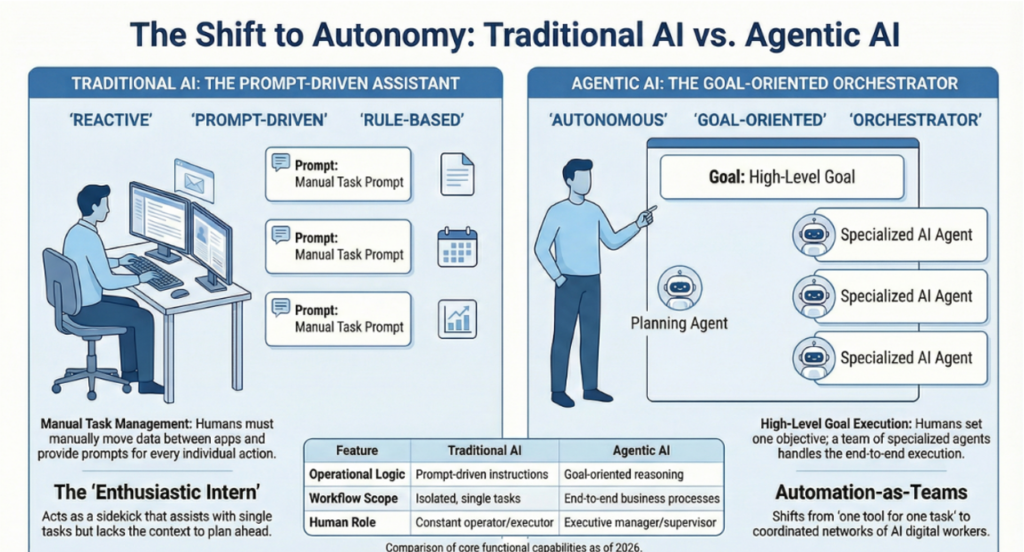
The biggest difference in this new phase of automation is that systems are now built around goals rather than individual instructions. Traditional automation like the old school robotic process systems relied on rigid rules and often failed if a process changed or an unexpected input appeared. In contrast modern agents understand human intent and interpret the context surrounding a request. They can plan a sequence of actions and adapt their behavior in real time based on the results they observe. This means you can give a high level objective such as managing a supply chain disruption or booking a multi city business trip and the agent will execute the necessary steps without needing constant human intervention.
The Rise of Agentic Networks
We have moved away from the idea of a single general purpose tool that tries to do everything. The current trend involves building intricate networks of specialized AI agents that collaborate across different software platforms. These digital workers communicate with each other using standardized protocols to complete multi step chores that span an entire organization. For example a market intelligence agent might spot a viral trend and instantly notify a supply chain agent to check inventory levels. This level of coordination allows businesses to scale complicated operations with very little human oversight.
You are the Executive Now
As these autonomous systems take over the repetitive cognitive work the role of the human professional is being restructured. You are effectively being promoted into the position of an executive manager who supervises a team of digital specialists. Instead of executing the tasks yourself you are responsible for defining the objectives and setting the ethical boundaries for your agents. This allows you to focus on high value activities like strategic relationship building and creative problem solving while the machines handle the data entry and reporting. Success in this new environment comes from your ability to direct and supervise these agents at scale.
The Thinking Backbone of Digital Workers
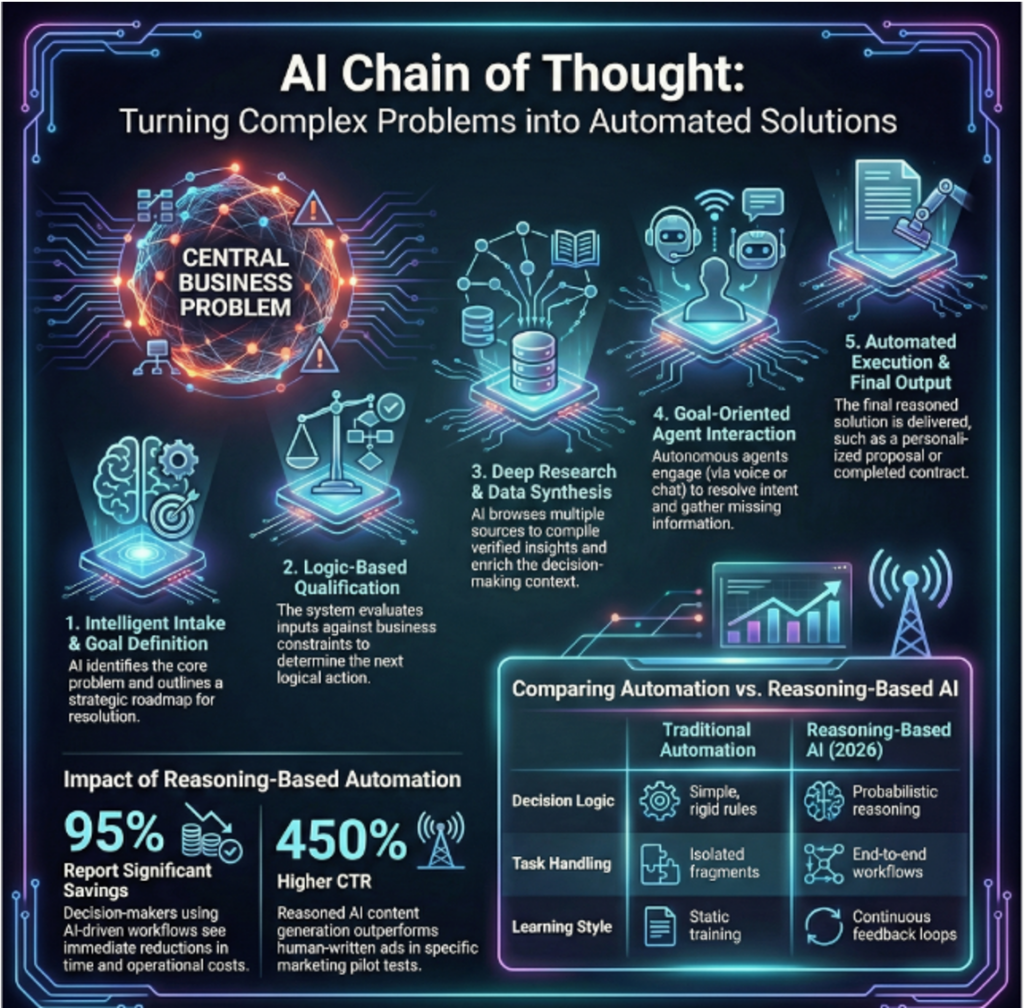
The intelligence behind these new digital coworkers is rooted in advanced reasoning models that prioritize thinking time. These models use a technique called chain of thought processing to solve complex logic problems by breaking them down into steps. This allows the AI to assess probabilities and refine its own outcomes before it delivers a final result. These capabilities have moved AI from being a reactive tool to being a proactive decision making partner that can explain the logic behind its choices. Enterprises that successfully orchestrate these reasoning models into a cohesive stack will find themselves at a significant competitive advantage.
A Roadmap for Transformation
Adopting this technology requires a disciplined approach because many organizations still struggle with the transition from pilots to production. The best way to start is by identifying high impact workflows that currently slow your team down or create unnecessary friction. You should treat AI as a core infrastructure layer rather than a simple add on to your existing apps. By starting with quick wins in areas like automated reporting or task routing you can build the momentum needed for a full scale transformation. The goal is to create a partnership where humans and machines work together to achieve common goals with high precision and trust.
References
• Jono Catliff, 10 AI Automations That Run My Business
• AIHR, 11 HR Trends for 2026 Shaping What is Next
• Product School, 15 AI Business Use Cases in 2026 and Real World Examples
• Stratagem Systems, AI API Integration Best Practices 2026
• IBM Think, AI Agents in Human Resources
• AI World Journal, AI Automation in 2026 and The Rise of Autonomous Systems at Scale
• Skyline Academic, AI Writing vs Human Writing
• Zapier, AI by Zapier and Easily adding AI steps to your workflows
• Airtable, AI for project management and Tools and best practices
• AI Digital, AI in digital marketing transformation
• Futran Solutions, Choosing the Right AI Use Cases
• MDPI, Differentiating Between Human Written and AI Generated Texts
• Future AGI, Generative AI in 2026 Trends and Tools
• Kellton, Generative AI Trends for 2026
• SayOne Technologies, Generative AI trends of 2026
• Webuters, The Evolution of Multimodal Generative AI in 2026
• Deloitte US, The State of AI in the Enterprise