
Most of a diligence checklist confirms what you already believe. A few questions tell you what you’re actually buying.
Most of a diligence process confirms the story the seller is already telling. The data room is organized to support the thesis. The management presentation is rehearsed. The standard checklist verifies that the numbers add up and the contracts exist. That work matters, and it rarely surprises anyone.
The questions that predict whether you will have operational pain after close are a different set, and they are usually not on the list. They are the ones that make the room go quiet for a second before someone answers. The goal of real diligence is not to confirm the business is good. It is to find where it breaks once it is yours. Here are the four places I have learned to look, and the question that gets you there versus the one that just fills the checklist.
Customer concentration: the number vs. the switching cost
The checklist asks for customer concentration. Everyone knows to ask it, and the seller has a clean answer ready. Bankers will tell you it is the single most common reason lower mid-market deals die in diligence, and most PE firms flag anything over 15 percent in one account. So it gets asked, and it gets answered, and the answer is rarely the whole story.
The operator question goes underneath the number. How hard would it be for the top three customers to leave, and what would it cost them to switch. A business with 40 percent in one customer who would need eighteen months and a painful re-integration to replace you is safer than one with 15 percent in a customer who could leave on Friday with a phone call. Check whether the big contracts survive a change of control, because a termination-on-sale clause turns your anchor customer into an open question the day you close. Concentration is the number on the checklist. Switching cost is where the risk lives.
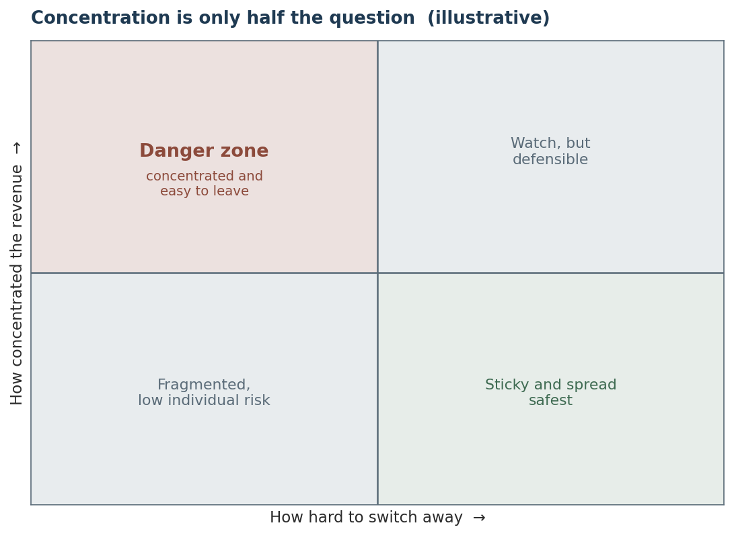
Figure 1. High concentration with low switching cost is the danger zone. Concentration alone is not. Illustrative.
The org chart vs. who actually holds the business together
The checklist wants the org chart and the headcount. Useful for planning, nearly useless for risk. The operator wants to know which three people, if they walked out, would take institutional knowledge, customer relationships, or a critical process with them.
Every lower mid-market business has key-person risk, and it is almost never the people the org chart flags. It is the operations manager who is the only one who understands how scheduling works. The salesperson who is the relationship for half the book. The bookkeeper who knows why the receivables are structured the way they are. Ask who the business cannot function without, then check whether anything ties those people to staying past the close. If the answer is a handshake and a hope, you are not buying a business. You are buying a job, and the people who make it work can hand you their notice in week two.
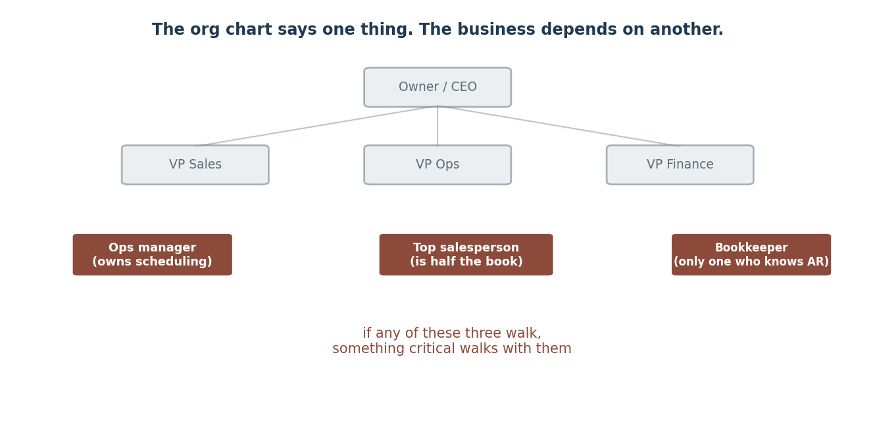
Figure 2. The hierarchy and the actual dependencies rarely match. Diligence should map the second one.
“Recurring revenue” vs. what’s actually recurring
The checklist takes recurring revenue at face value, because it is the phrase that drives the multiple. The operator pressure-tests it, because it is the most over-claimed line in the data room.
Separate what is contractually recurring from what is habitually recurring from what just “has always renewed.” Real recurring revenue survives a price increase, a service hiccup, and a competitor’s phone call. Revenue that recurs only because nobody has bothered to leave is a churn event waiting for a trigger, and the trigger is often the ownership change itself. Customers use a sale as a natural moment to reevaluate. Ask how many of those renewals are under contract, how many are month to month, and how many are one relationship away from walking. The gap between claimed recurring and real recurring is where post-close models quietly fall apart.
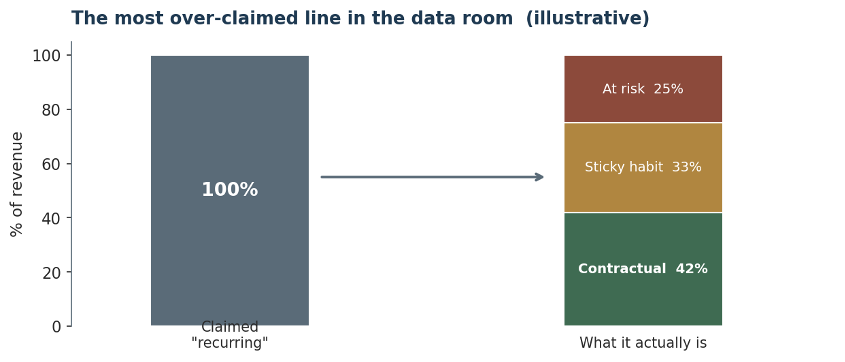
Figure 3. The headline number hides very different qualities of revenue. The decomposition is the real answer. Illustrative.
The margin trend vs. what’s propping it up
The checklist confirms the margin. The operator asks what is holding it there and whether it lasts. A margin that improved because the owner stopped investing is a margin you inherit and then watch revert.
So ask the uncomfortable version. What did the owner stop spending on to get the business ready to sell. Deferred maintenance, a hiring freeze, underpaid key staff, a marketing budget cut to zero, a temporary dip in input costs already reversing. Sellers optimize the trailing twelve months because that is what gets valued, and the quickest way to lift near-term margin is to stop spending on things whose absence takes a year to hurt. The answer is usually the exact spending you will have to restart on day one, which turns a headline margin into a number you cannot hold. This is where a quality-of-earnings review earns its fee, stripping out the add-backs that recur every year despite being labeled one-time.
Where AI changes the diligence, and where it can’t
AI is genuinely reshaping the mechanical half of diligence. The document review, the contract extraction, the transaction-level analysis that used to eat weeks now takes hours. McKinsey’s numbers on generative AI in M&A are striking, with CIM extraction dropping from as much as forty hours to under one, and diligence workstreams completing meaningfully faster. One mid-market firm ran forty-two thousand documents through an AI pass in under six hours and surfaced EBITDA adjustments a manual review had missed. That is real, and worth using.
Here is the trap. Faster data processing tempts people to mistake more analysis for better judgment. The questions in this piece are exactly the ones AI cannot answer from a data room, because the answers are not in the documents. They are in the room. In the hesitation before someone responds. In what the management team does not volunteer. AI is excellent at search and surface. It does not do review and judgment, and it never sits across the table and reads the pause. Used well, it clears the mechanical work so you have more time for the questions that predict pain. Used badly, it just fills the checklist faster and more confidently than before.
The questions that make the room quiet
A checklist tells you whether the business is what the seller says it is. It rarely tells you what it will be like to run. The questions that predict operational pain share one quality. They cannot be answered from the data room, and they make people pause before they answer. That pause is the signal.
Whether you are buying the business, funding the person who is, or trying to understand a company you are about to help run, the instinct is the same. Look past what is on the checklist to what is actually holding the business up, and ask what happens to it the day the owner is gone.
References
- CT Acquisitions, M&A Due Diligence Checklist (2026) — deal-killer categories, change-of-control clauses, LOI-to-close failure rates. https://ctacquisitions.com/mergers-and-acquisitions-due-diligence-checklist/
- Beancount.io, Customer Concentration Risk: The 10% Rule (2026) — PE 15% threshold and concentration as the top deal-breaker. https://beancount.io/blog/2026/05/11/customer-concentration-risk-10-percent-revenue-threshold-business-valuation-loan-capacity-negotiating-leverage-guide
- Acquisition Stars, Due Diligence Red Flags That Kill Deals (2026) — key-person dependency and “buying a job.” https://acquisitionstars.com/due-diligence-red-flags
- Tabber Benedict, Lower Middle-Market M&A Due Diligence Checklist (2026) — recurring-revenue quality and operational systemization. https://www.tabberbenedictnewyork.com/lower-middle-market-ma-due-diligence-checklist-what-buyers-look-for-before-closing-a-deal/
- WorkWise Solutions, AI Due Diligence for Private Equity (2026) — AI handling the 60-70% data-intensive work so teams focus on judgment. https://workwisesolutions.org/guides/ai-due-diligence-private-equity.html
- V7 Labs, PE Due Diligence: AI vs Traditional (2026) — McKinsey time-compression figures across deal stages. https://www.v7labs.com/blog/ai-vs-traditional-pe-due-diligence
- Triada, AI Document Review Is Reshaping PE Due Diligence — first-pass, not final-answer framing and governance. https://triadanet.com/ai-document-review-is-reshaping-pe-due-diligence/